
OFFSEASON TRAINING ACTIVITIES (OTA)
FOR STUDENT ATHLETES
OTA (Offseason Training Activities) is a 40-day faith and fitness program designed to strengthen the body, build discipline, and deepen faith.
Beyond Game Day: Why Kids Need More Than Organized Sports to Stay Active
Many parents and kids associate organized sports with fitness. Although there are many advantages to signing a child up for a sports team, practicing and playing games once or twice a week will not be enough to reach activity goals. Additionally, parents can no longer rely on physical education in schools to provide sufficient physical activity for children.
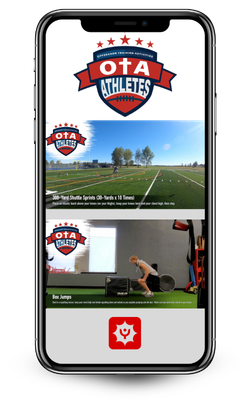
Offseason Training Activities (OTA) is a 6-week program designed for middle school students to improve and maintain overall sports conditioning before the athletic season begins.
Program Goals
The Offseason Training Activities (OTA’s) program is designed to develop the whole student—physically, mentally, and spiritually.
Grounded in Christian values, the program emphasizes stewardship of the body, discipline, and character development.
Program goals include:
Strengthening the body while honoring it as God’s creation
(1 Corinthians 6:19–20)

Improving strength, speed, agility, endurance, and overall athletic performance
Teaching discipline, perseverance, and self-control through structured training

Promoting confidence, teamwork, and respect for self and others
Encouraging healthy habits that support lifelong wellness and faith-centered living

Coach Yata with OTA Student Athletes
Program Outcomes
By completing the 6-week OTA’s program, participants will:

Improve physical conditioning and movement quality across all sports.
Enter their athletic season better prepared, confident, and resilient.
Demonstrate increased discipline, consistency, and accountability.
Develop a mindset of perseverance and purpose in both sports and daily life.

Gain a deeper understanding that physical training is a form of stewardship and worship.

Faith Integration
Each training session includes:
A short devotional or scripture reflection.
Emphasis on character traits such as integrity, humility, and perseverance.
Encouragement to compete with purpose, gratitude, and faith.
During puberty, stretching becomes particularly important due to rapid bone growth outpacing muscle and tendon development. This can lead to tightness, reduced flexibility, and increased risk of injury. While stretching won't make you taller, it can improve posture and flexibility, making you appear taller and more confident.
Here's why stretching is crucial during puberty:
Reduced Flexibility:
Bone growth during puberty is often faster than muscle growth, leading to tightness and decreased range of motion.
Injury Prevention:
Tight muscles are more susceptible to strains and other injuries, especially during physical activity.
Pain Relief:
Stretching can help alleviate pain associated with growth spurts, such as heel pain, hamstring tightness, and knee pain.
Improved Performance:
Increased flexibility can enhance athletic performance and coordination.
Posture and Confidence:
Stretching can improve posture, which can make you appear taller and more confident.
Types of stretching:
Holding a stretch for a period of time. This is generally recommended after a warm-up and for post-workout cool-downs.
Involves controlled movements to stretch muscles, like arm circles or leg swings. This is recommended before physical activity to warm up the muscles.
Important considerations:
Listen to your body: Avoid stretching to the point of pain.
Warm-up first: Muscles are more elastic and less prone to injury when warmed up.
Be consistent: Regular stretching, even for a short period each day, can make a difference.
Consider professional guidance: A physical therapist or coach can help you develop a safe and effective stretching routine.
By incorporating regular stretching into your routine, you can navigate the physical changes of puberty with greater comfort, flexibility, and reduced risk of injury, according to the Nationwide Children's Hospital.
OTA Client Reviews
-
![]()
Jon W.
“Unlike most Strength and Performance coaches, Yata shows a unique flexibility in customizing each and every program and workout. Our family has used Yata for 1x1 training for a high performance football player and as well as an entire strength and conditioning program for youth athletic team. Each program is designed for optimum results. His Approach not only holds you accountable to your goals, but also encourages you to succeed. We highly recommend Yata and Strongside Athletes to help you live your best life.”
-
![]()
Parent
“All three of my young children (ages 9, 9, and almost 12) absolutely love training with Coach Yata! As a life-long athlete myself, I've seen a lot of training regimens, but what Yata brings to the workout that most other trainers don't bring is a calm and confident demeanor. He also encourages and gives strength to the timid. My kids always, always leave Yata’s training sessions happy, tired and wanting more, but most important, they feel they can do more! You change more than physiques, you change hearts and minds for the better.”
-
![]()
Kristie
“All three of my young children (ages 9, 9, and almost 12) absolutely love training with Coach Yata! As a life-long athlete myself, I've seen a lot of training regimens, but what Yata brings to the workout that most other trainers don't bring is a calm and confident demeanor. He also encourages and gives strength to the timid. My kids always, always leave Yata’s training sessions happy, tired and wanting more, but most important, they feel they can do more! You change more than physiques, you change hearts and minds for the better.”